Shelves Full, Register Empty: How Filipino-American Retailers Are Finally Breaking the Bulk-Buy Habit
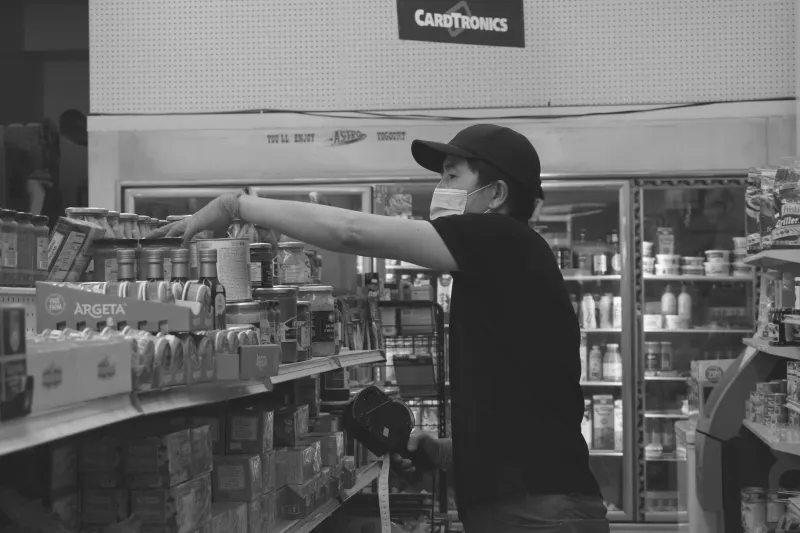
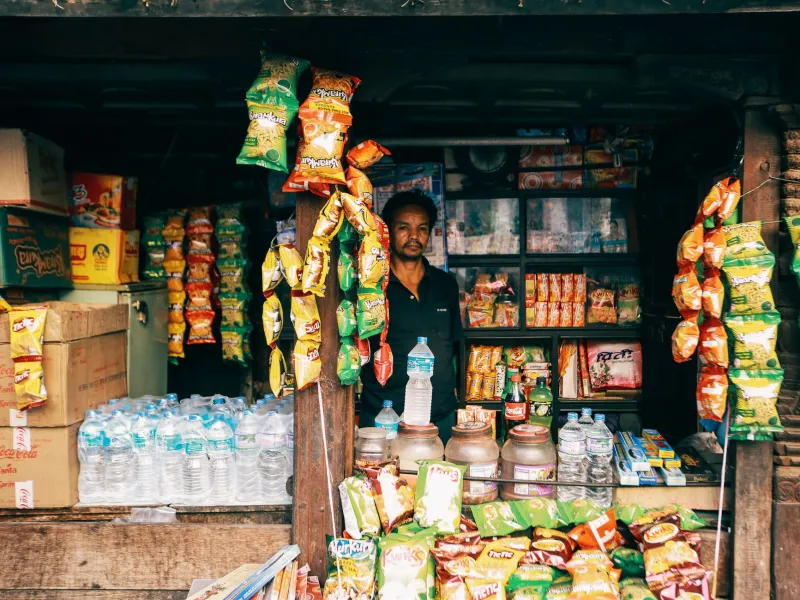
Walk into almost any Filipino-American grocery or variety store and you'll notice something: the shelves are stacked. Cans of coconut milk three rows deep. A full wall of fish sauce. Enough banana ketchup to last a small barangay through typhoon season. It looks impressive. It feels responsible. And for a lot of owners, it feels right.
But here's the thing — full shelves don't always mean a healthy business. Sometimes, they mean the opposite.
The Cultural Logic Behind Buying Big
To understand why so many Filipino-American retailers overbuy, you have to understand where the habit comes from. Back home in the Philippines, buying in bulk was often a survival strategy. Markets rewarded volume purchases. Storage was communal. If you bought extra, your neighbor benefited too — that's bayanihan in its most practical form. And if the supply chain was unpredictable, stocking up made total sense.
That mindset crossed the Pacific with the first wave of Filipino entrepreneurs. And honestly, for a while, it worked. When you're building a store that serves a tight-knit immigrant community hungry for familiar products, having everything on hand is a competitive edge.
But the US retail environment operates on different logic. Shelf space has a cost. Storage has a cost. And products that don't move? They don't just sit there quietly — they tie up cash, expire, get damaged, and quietly drain your margins.
"I thought I was being smart," says Marivic Santos, who runs a Filipino grocery in the San Diego area. "I found a wholesaler who gave me a great price on a pallet of canned goods. I bought it all. Six months later, half of it was still sitting in my back room. That 'deal' cost me more than if I'd just bought what I needed."
Marivic's story isn't unusual. It's practically a rite of passage.
Where the Math Goes Wrong
The bulk-buy trap is sneaky because it looks like savings on the front end. Wholesale pricing feels like winning. But the true cost of inventory isn't just what you paid — it's what that money could have done elsewhere.
Retailers call this "carrying cost," and it includes storage, insurance, spoilage, and the opportunity cost of cash that's sitting in a box of frozen milkfish instead of being used for payroll, marketing, or a better point-of-sale system.
For Filipino-American merchants who came up learning to stretch every dollar, the idea that buying more could actually be losing money takes some mental rewiring.
Roland Navarro, who owns a small Filipino specialty shop outside Chicago, put it bluntly: "I was running a warehouse, not a store. My cash flow was a disaster, but my shelves looked beautiful. Nobody tells you that inventory is a liability until it moves."
Roland eventually hired a part-time bookkeeper who introduced him to basic inventory turnover metrics — how quickly a product sells relative to how much you're holding. That single shift in perspective changed how he orders everything.
The US Supply Chain Is Actually on Your Side
Here's what many Filipino-American retailers don't fully leverage early on: American wholesale and distribution infrastructure is remarkably reliable compared to supply chains in many parts of Asia. Reordering is faster. Minimum order quantities are often lower. And many distributors offer flexible delivery schedules.
That reliability removes one of the core reasons to overbuy in the first place.
"Back in the Philippines, if something ran out, you didn't know when it was coming back," says Liza Fernandez, who manages purchasing for her family's grocery in New Jersey. "Here, I can reorder on a Tuesday and have product by Thursday. Once I really understood that, I stopped panic-buying."
Liza now orders in smaller batches, more frequently, and tracks what sells week-over-week using a spreadsheet she built herself. It's not fancy, but it works. Her storage room has gone from a maze of pallets to a manageable space she can actually navigate.
Reading Your Own Community's Buying Patterns
One of the most underrated business tools a Filipino-American retailer has is simple proximity to their customer base. You know these people. You know that ube demand spikes before Easter. You know that bagoong moves fast in summer when families are grilling. You know that the week before a big local fiesta, certain products will fly off the shelves.
That community knowledge is data — it just needs to be treated like data.
"I started keeping a notebook," says Marivic. "Every time a customer asked for something I didn't have, I wrote it down. Every time something sat too long, I wrote that down too. After three months, I had a completely different picture of what my store actually needed versus what I thought it needed."
Some merchants have graduated to point-of-sale software that tracks sales velocity automatically, but even low-tech approaches beat buying by gut feeling alone.
The key insight: your community's buying patterns are specific to your location, your demographics, and your store's personality. A Filipino grocery in Daly City serves a different customer than one in suburban Virginia. What works for one won't automatically work for the other — and neither should buy inventory like they're interchangeable.
Practical Shifts That Actually Help
Merchants who've successfully broken the bulk-buy habit tend to share a few common practices:
Set a reorder point, not a restock impulse. Instead of buying more when shelves look low, define a specific unit count that triggers a reorder. This removes emotion from the equation.
Negotiate smaller minimums with your distributors. Many wholesalers will work with you, especially if you're a consistent customer. Ask. The worst they can say is no.
Run a slow-mover audit quarterly. Every three months, identify the products that haven't moved well and make a decision — discount them, bundle them, or stop ordering them altogether.
Separate "cultural must-haves" from "experimental" stock. Some products are non-negotiable for your community. Others are bets. Treat them differently when you're buying.
Talk to other merchants. The Filipino-American business community is generous with real-world knowledge. If someone in your network has figured out a smarter way to order, they'll usually tell you.
Unlearning Is Part of the Business
Nobody's saying bulk buying is always wrong. There are absolutely times when stocking up makes sense — before a major holiday, when a supplier is offering a genuinely limited deal, or when a product has proven itself as a consistent seller.
The goal isn't to abandon resourcefulness. It's to redirect that instinct toward smarter decisions. Filipino-American entrepreneurs are some of the most adaptable business owners in the country — that's not a compliment, it's an observable fact. The same community that figured out how to build businesses from scratch in a foreign country can absolutely figure out inventory management.
It just might mean letting go of a habit that felt like wisdom, and replacing it with one that actually is.