Fiesta Economics: How Smart Filipino-American Merchants Turn Cultural Celebrations Into Year-Round Revenue
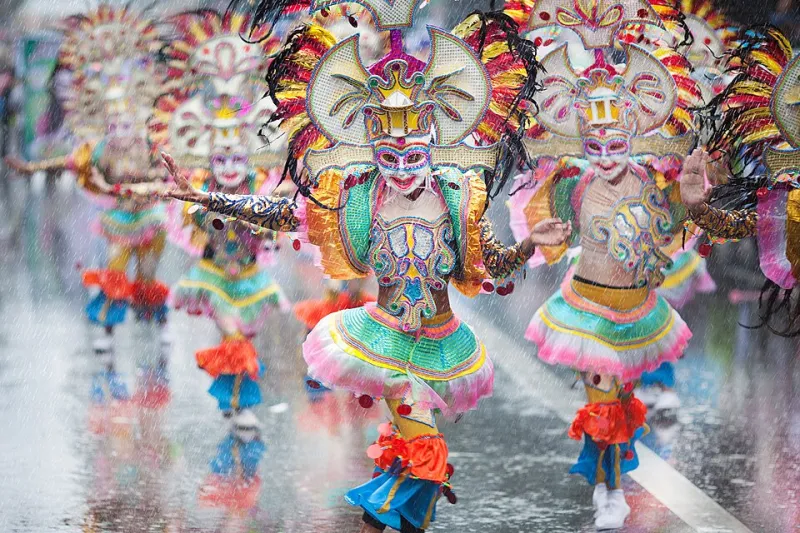
Photo: Michol Sanchez, CC BY-SA 4.0, via Wikimedia Commons
Walk through any Filipino street fair on a Saturday afternoon and what you'll see looks a lot like pure celebration — the lechon, the live folk dancing, the kids in barong and Maria Clara dresses. But look a little closer at the vendor tables, the banner placements, and the QR codes taped to every booth, and you'll start to see something else entirely: a sophisticated, community-powered marketing machine.
For a growing number of Filipino-American business owners, cultural events aren't a side activity. They're a core part of the revenue strategy.
More Than a Booth at a Booth
The old model was simple: pay for a vendor spot, sell some food or merchandise, pack up Sunday evening, and call it a weekend. But the merchants who are really winning aren't thinking about festivals that way anymore.
Maricel Santos, who runs a Filipino skincare and wellness brand out of Daly City, California, started attending local Fil-Am festivals six years ago mostly to get her name out there. What she discovered surprised her.
"The booth itself barely covered costs the first year," she says. "But I collected over 400 email sign-ups in one weekend. By the following Christmas, those were some of my highest-converting customers."
She's since built her entire marketing calendar around four major events — Pistahan in San Francisco, a local Flores de Mayo celebration, a regional Filipino Heritage Month expo, and a Christmas bazaar. Each event feeds the next. The community she meets in May is buying gift sets in December.
The Sponsorship Math Nobody Talks About
Vendor tables get a lot of attention, but local business owners who've been in the game longer will tell you that event sponsorship is where the real leverage lives — if you approach it strategically.
Sponsoring a stage, a cooking competition, or even a cultural pageant at a Filipino-American festival can run anywhere from $500 to several thousand dollars depending on the market and the event's scale. That might feel steep for a small Main Street business. But the return isn't just a logo on a banner.
Roland Aquino, who owns an insurance agency in the Chicago suburb of Skokie, has sponsored the local Barrio Fiesta for three consecutive years. He's tracked the results carefully.
"Year one, I got maybe five new clients directly from the event," he says. "But the bigger thing was the trust. People started seeing me as someone invested in the community, not just someone selling policies. That's not easy to buy with a Facebook ad."
He estimates that his sponsorship investment has generated roughly eight times its cost in new and referred business when tracked over a 12-month window. The key, he says, is showing up authentically — not just writing a check and disappearing.
Turning One Weekend Into a 90-Day Campaign
The merchants pulling the most value out of Filipino community events treat them less like isolated happenings and more like campaign anchors.
Before the event, they're building anticipation on social media, teasing festival-exclusive products or promotions, and partnering with event organizers on cross-promotion. During the event, they're capturing content, collecting contact information, and making personal connections that go beyond a transaction. After the event, they're following up — through email, through social media tagging, through exclusive post-event offers.
Jennifer Lim, who operates a Filipino bakery in the Los Angeles area, puts it plainly: "The festival is the spark. Everything after is the fire."
She launches a limited-edition pandesal flavor every year timed to the local Fil-Am Heritage Festival, creates a social media countdown, and sells pre-orders that ship the week of the event. By the time the festival actually arrives, she's already done a significant chunk of her projected sales — and the booth just adds to it.
Community Events as Market Research
Here's an angle that doesn't come up enough: Filipino festivals are some of the best, most accessible market research available to small business owners in these communities.
Where else can you put a product directly in front of hundreds or thousands of Filipino-American consumers in a single afternoon, watch their reactions in real time, collect feedback, and test new offerings — all while building relationships?
One restaurant owner in the Seattle area used a local Pista ng Nayon event to test three new menu items before adding them to his permanent menu. Two became bestsellers. One got politely ignored. He considers the festival his "living focus group."
Making It Work Without a Big Budget
Not every small business can afford premium sponsorships or large vendor fees. But there are ways to participate meaningfully at lower cost.
Volunteering your business's services or products in exchange for recognition is one underused approach. Partnering with complementary businesses to split a vendor booth is another. Even simply showing up as a community member — not a vendor — and networking authentically builds the kind of trust that eventually translates to business.
The Filipino-American business community is, at its core, a relationship economy. Events are where those relationships get built. The revenue follows.
The Bigger Picture
For Filipino-American entrepreneurs, cultural events carry a dual weight. They're business opportunities, yes — but they're also expressions of identity and community investment. The merchants who seem to thrive most understand that these two things don't have to be in tension.
When your business shows up at a Flores de Mayo celebration or a Barrio Fiesta not just to sell but to contribute, to celebrate, and to belong — that's when the community starts to feel like your customer base is also your family.
And in Filipino culture, that's not a metaphor. That's just how business gets done.