The Old Notebook That Knows Your Customers Better Than Any App

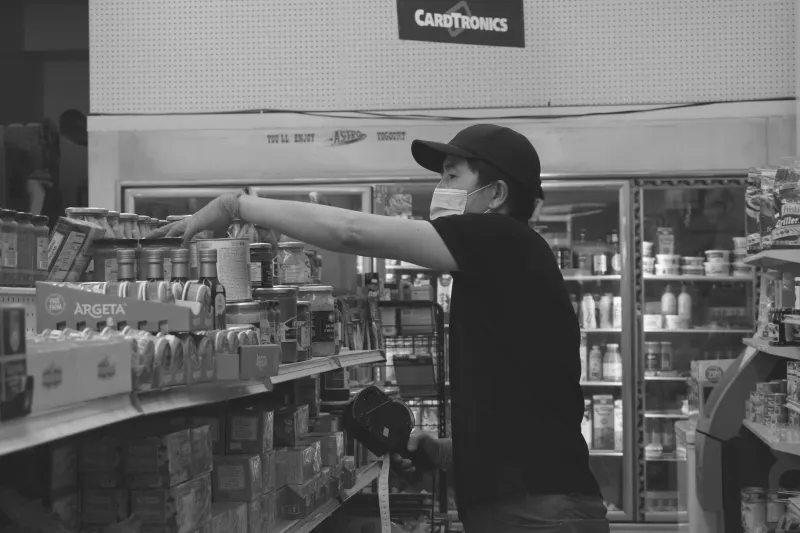
Walk into Maricel Tan's dry goods store in Daly City on any given Tuesday morning, and you'll notice something sitting next to the register that looks like it belongs in a grade school classroom. It's a thick, slightly battered composition notebook, its cover soft from years of handling, the pages dense with handwriting in two languages. Maricel calls it her tala — her record. Her customers call it proof that she actually pays attention.
"My lola kept one," Maricel says, not looking up as she jots something down after a transaction. "Her customers knew she remembered them. That was the whole point."
Across Filipino-American business communities in the US — from the strip malls of Carson, California to the corner shops of Jersey City — a quiet counter-movement is pushing back against the idea that going fully digital is always the smartest move. More merchants are talking openly about the handwritten customer record: the order book, the client journal, the personal notes that live behind the counter and hold information no software dashboard is quite designed to capture.
Where the Habit Comes From
This isn't accidental. In the Philippines, small-scale merchants have long kept handwritten utang ledgers — informal credit books tracking what neighbors owed, what they'd paid, and sometimes what life circumstances explained the gap. The practice wasn't purely transactional. It was relational. The ledger was a record of trust as much as debt.
When Filipino entrepreneurs transplanted their businesses to the US, many carried that instinct with them — even when American business culture pushed them toward point-of-sale systems, loyalty apps, and digital customer databases. The notebook stayed because it did something the software didn't: it held context.
"A database tells me Mrs. Santos bought ube jam three times last month," explains one grocery owner in Panorama City who asked to stay anonymous. "My notebook tells me she buys extra when her daughter visits from Seattle, and that her daughter is allergic to coconut. Those are two very different kinds of information."
What the Notebook Actually Tracks
The contents of these records vary widely, but a few themes come up consistently when you talk to merchants who swear by them.
Personal details that matter. Birthdays, anniversaries, the names of kids and grandkids, dietary restrictions, religious observances. Not the stuff a loyalty app prompts you to enter — the stuff that comes up naturally in conversation and gets quietly written down later.
Ordering patterns and preferences. Which cut of pork a customer always asks for. Whether someone prefers their bibingka with or without salted egg. What brand of vinegar a family has been buying for twenty years and will not substitute under any circumstances.
Informal credit and layaway arrangements. In communities where trust-based credit still operates outside formal systems, the notebook is often the only record that exists. It's not just convenient — it's essential.
Flags and follow-ups. If a regular hasn't come in for three weeks, some merchants note it. When that customer returns, the owner can ask — genuinely, not through an automated "we miss you" email — whether everything is okay.
This last category might be the most underappreciated. In tight-knit Filipino-American neighborhoods, a merchant who notices an absence isn't being nosy. They're being a neighbor.
The Competitive Edge You Can't Automate
Here's the business case, stripped of the sentimentality: customers who feel genuinely known spend more, return more often, and refer more people. That's not folk wisdom — it's what retention research has been saying for decades. The question is how you get there.
Digital tools are excellent at scale. If you're managing thousands of customer relationships, a CRM earns its keep. But for the small-format, high-touch retail that defines most Filipino-American main street businesses, the overhead of maintaining a digital system sometimes outweighs the benefit — especially when the analog version is faster, more flexible, and frankly more personal.
"When I look up a customer on my tablet, they see me looking at a screen," says one bakery owner in Waipahu, Hawaii. "When I flip open my notebook, they see that I wrote something down about them. It's a completely different feeling."
That distinction — being seen versus being processed — is not small. It's the whole game for independent retailers competing against chains and e-commerce.
Blending Old and New Without Losing Either
The most effective merchants aren't choosing between analog and digital — they're using both deliberately.
A common approach: keep the handwritten notebook as the primary relationship tool, then periodically transfer key data into a simple spreadsheet or a lightweight CRM. The notebook captures the texture of the relationship in real time. The digital record makes it searchable and shareable, useful for inventory forecasting or for training a new employee on who's who.
Some owners go further. One Fil-Am deli owner in Chicago photographs a page of her notebook every week and stores it in a shared folder so her part-time staff can prep before a regular customer walks in. Low-tech input, smart-tech storage. The customer still gets the experience of being remembered — because the information is actually there, not buried in a dropdown menu nobody checks.
A few practical tips from merchants who've refined the system:
- Keep it behind the counter, not in the back. The notebook only works if it's reachable during a conversation.
- Date your entries. Patterns only emerge when you can see the timeline.
- Write in whatever language feels natural. Several owners keep bilingual notes — English for the facts, Filipino for the context and tone. Nobody else needs to read it fluently.
- Don't overthink the format. The goal isn't a perfect system. It's useful information you'll actually use.
The Relationship Is the Record
There's a version of this conversation that gets too romantic — the idea that pen and paper are inherently more authentic than pixels, that old ways are always better ways. That's not quite the point.
The point is that the purpose of record-keeping in a community-oriented business is to deepen relationships, not just track transactions. Whatever tool helps you do that is the right tool. For a lot of Filipino-American merchants, that tool happens to have a cardboard cover and cost ninety-nine cents at the dollar store.
Maricel closes her notebook and slides it back beside the register. A customer walks in — an older Filipina woman who greets her by name, asks about her kids, and orders the same thing she probably orders every week. Maricel already knows what it is. She wrote it down.
That's not inefficiency. That's the whole business model.