Roots Over Reach: How Filipino-American Merchants Are Owning the Neighborhood Game
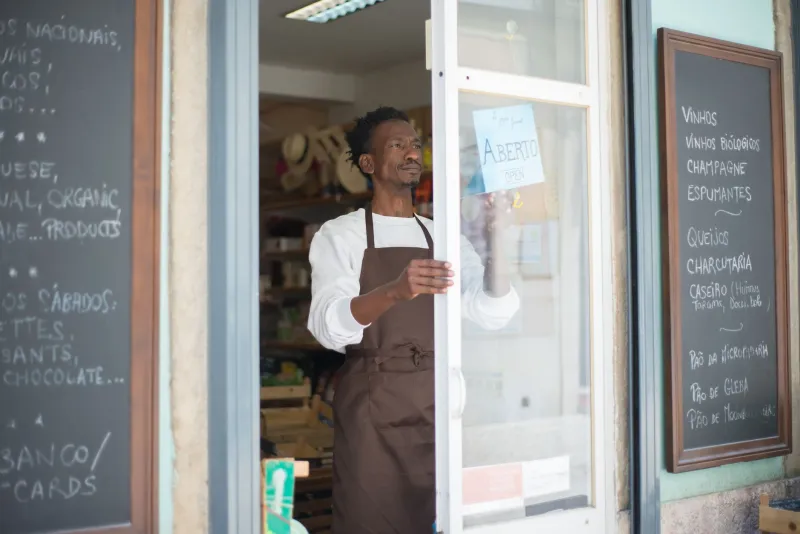
There's a sari-sari store logic baked into the DNA of Filipino-American retail. You know your customer's name. You know their kids' names. You probably know what they're cooking for Sunday dinner. And that kind of intimacy — the kind that takes decades to build — is exactly what Amazon, Walmart, and every other big-box competitor simply cannot buy their way into.
Across Filipino-American commercial corridors from Daly City to Woodside, Queens, a quiet competitive revolution is underway. Small business owners who once worried about being crushed by e-commerce giants are discovering that their deepest advantage was hiding in plain sight all along: they belong here.
The Neighborhood Knows
When Maribel Ocampo opened her Filipino grocery and deli in the Eagle Rock neighborhood of Los Angeles nearly eighteen years ago, she didn't have a marketing budget. What she had was a phone full of contacts from her church, her kids' school, and the local Filipino-American association she'd been a member of since moving to California in the late '90s.
"I didn't advertise. I just told people," she said. "And those people told other people. That's how it works in our community."
Her store now serves three generations of some families — lolas who first walked in looking for Jufran banana ketchup, their adult children who stop by for fresh lumpia after work, and grandkids who come in for halo-halo on weekends. That kind of multi-generational loyalty isn't a marketing strategy. It's a relationship. And it compounds over time in ways that no paid ad campaign can match.
This is the hyperlocal advantage in its purest form: you're not just a vendor, you're a fixture. And fixtures don't get replaced by two-day shipping.
What "Knowing Your Customer" Actually Means
The phrase gets thrown around in business school case studies, but Filipino-American merchants tend to live it in a way that goes well beyond remembering someone's order. It means knowing when a regular customer is going through a hard time and quietly adding a little extra to their bag. It means stocking the specific brand of vinegar that one elderly lolo has been asking for since the store opened. It means holding a birthday cake order until 9 PM because you know the family's work schedule.
Roland Buenaventura, who runs a Filipino bakery and catering operation in the Pilsen neighborhood of Chicago, puts it simply: "Big chains track purchase behavior. We track people."
His point isn't just philosophical. It translates directly to retention numbers that would make a corporate regional manager jealous. Roland estimates that more than 70 percent of his weekly revenue comes from repeat customers — people who have been coming in for years and who actively refer friends, coworkers, and relatives. He's never run a single paid social media ad.
"Word of mouth in a Filipino community is faster than the internet," he laughed. "Seriously. Someone tries your food at a birthday party on Saturday, and by Monday morning you've got five new customers."
Cultural Authenticity Is a Moat
Here's something the big retailers haven't figured out: you can't manufacture cultural authenticity. You can hire a Filipino-American influencer to post a branded reel, sure. But you cannot replicate the feeling of walking into a store where the owner greets you in Tagalog, where the music playing is something your grandmother would recognize, and where the products on the shelves reflect a specific, lived cultural experience.
That authenticity functions as what business strategists call a "moat" — a structural advantage that's genuinely difficult for competitors to cross.
National grocery chains have tried. You've probably seen the token "International Foods" aisle stocked with a few bottles of patis and some frozen spring rolls. It's not the same. Filipino-American shoppers know the difference immediately, and they vote with their wallets.
Cheryl Dimalanta, who owns a specialty food shop in the Historic Filipinotown area of Los Angeles, has watched national chains come and go in her neighborhood over the years. "They set up, they try to compete on price, and then they leave," she said. "Because they don't understand that we're not just selling food. We're selling home."
That emotional resonance — the feeling of connection to heritage, family, and community — is something no supply chain optimization can deliver.
Doubling Down on Main Street Identity
The smartest Filipino-American business owners aren't trying to out-Amazon Amazon. They're leaning harder into exactly what makes them irreplaceable: their physical presence, their community ties, and their cultural specificity.
This means investing in the in-store experience — making the shop feel like a gathering place, not just a transaction point. It means showing up at local events, sponsoring youth sports teams, and being visible in the neighborhood in ways that go beyond commerce. It means being the kind of business that people feel good about supporting, not just because the product is good, but because the owner is a neighbor.
Some owners are formalizing what used to be informal. They're creating customer loyalty programs built around community milestones — discounts on Philippine Independence Day, special promotions tied to local school events, free items for customers celebrating birthdays. These aren't gimmicks. They're extensions of the same relational logic that has always driven Filipino-American commerce.
Others are using social media not to advertise, but to document community life — posting photos of regulars, celebrating local events, and turning their business's online presence into a kind of neighborhood bulletin board. The result is an audience that feels like a community, not a customer list.
The Competitive Edge That Can't Be Copied
The national chains will keep coming. The e-commerce platforms will keep optimizing. Prices will keep fluctuating, and consumer habits will keep shifting. But there's one thing that no algorithm, no logistics network, and no corporate strategy can replicate: the Filipino-American business owner who has been in the same neighborhood for twenty years, who knows your family, who stocks the things you actually want, and who makes you feel like you belong when you walk through the door.
That's not a niche. That's a superpower.
And on Main Street — whatever street that happens to be in your city — it's the kind of advantage that wins.
Know a Filipino-American business owner who's built something special in their neighborhood? Tell us about them at phmainstreet.com.